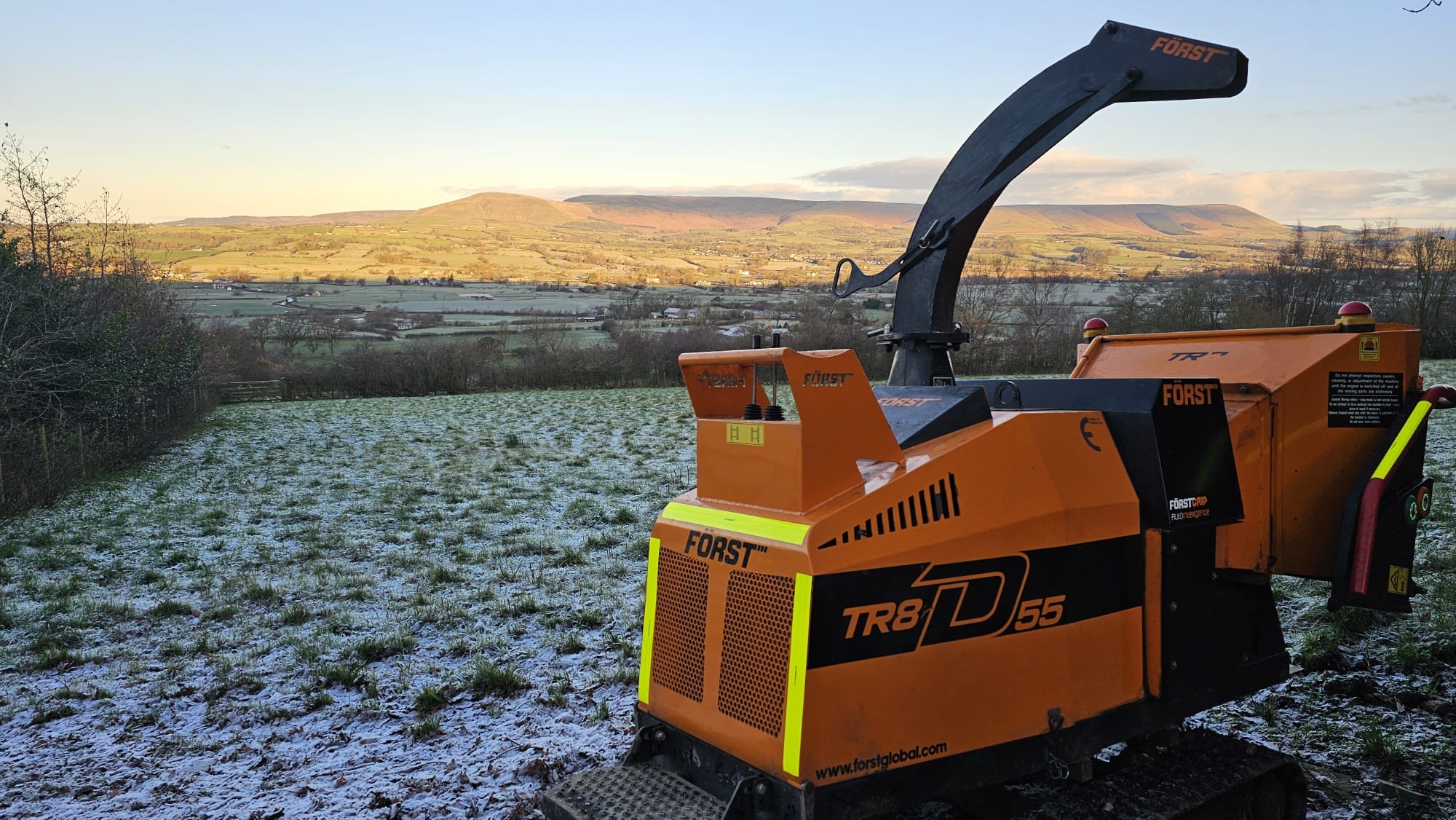
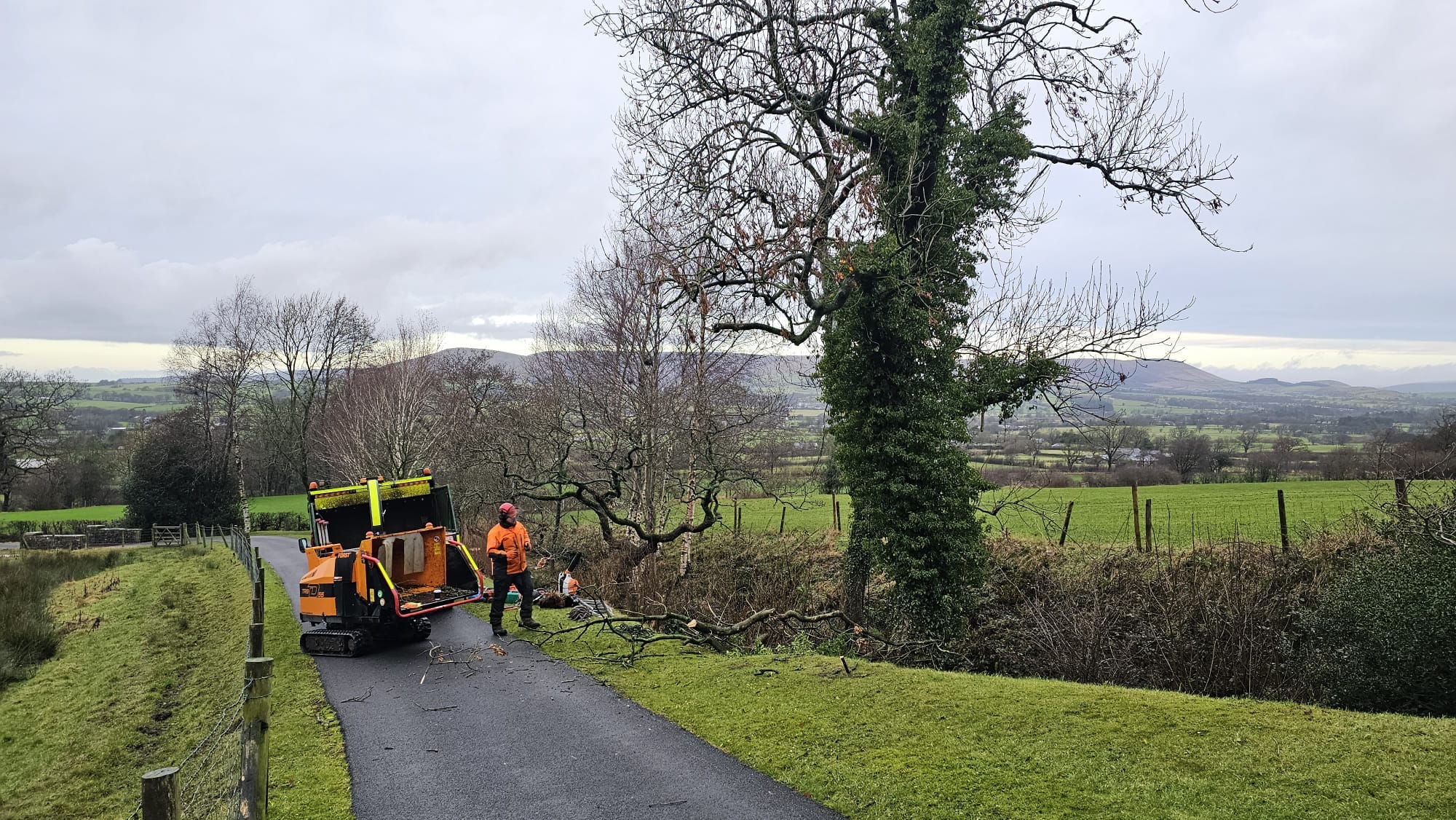
Saying goodbye to two ash trees in Longridge due to ash dieback. ❄️ Frosty Longridge providing us with the best scenery to work around. What is Ash Dieback Ash dieback, scientifically known as Hymenoscyphus fraxineus (formerly Chalara fraxinea), is a devastating fungal disease that affects ash trees (Fraxinus species). It is caused by an invasive […]
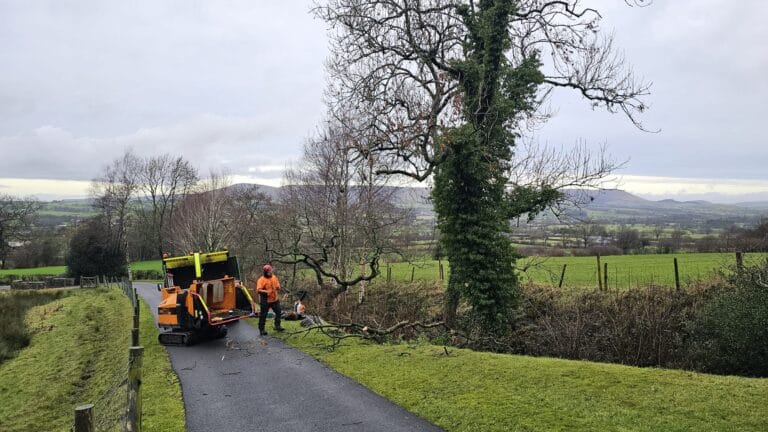
Saying goodbye to two ash trees in Longridge due to ash dieback. ❄️ Frosty Longridge providing us with the best scenery to work around.
Ash dieback, scientifically known as Hymenoscyphus fraxineus (formerly Chalara fraxinea), is a devastating fungal disease that affects ash trees (Fraxinus species). It is caused by an invasive fungal pathogen originally from Asia.
Ash dieback manifests primarily through the following symptoms:
Ash dieback can spread rapidly through airborne fungal spores, as well as through the movement of infected plant material, such as saplings or firewood. Once established in an area, it poses a significant threat to ash populations, with potential ecological and economic impacts.
Efforts to manage ash dieback typically involve a combination of strategies, including the removal and destruction of infected trees, monitoring and surveillance programs to track disease spread, research into resistant tree varieties, and public awareness campaigns to prevent further dissemination of the pathogen.
Given the severity of ash dieback and its potential consequences for ecosystems, it remains a significant concern for foresters and conservationists.
Get your free quote today!